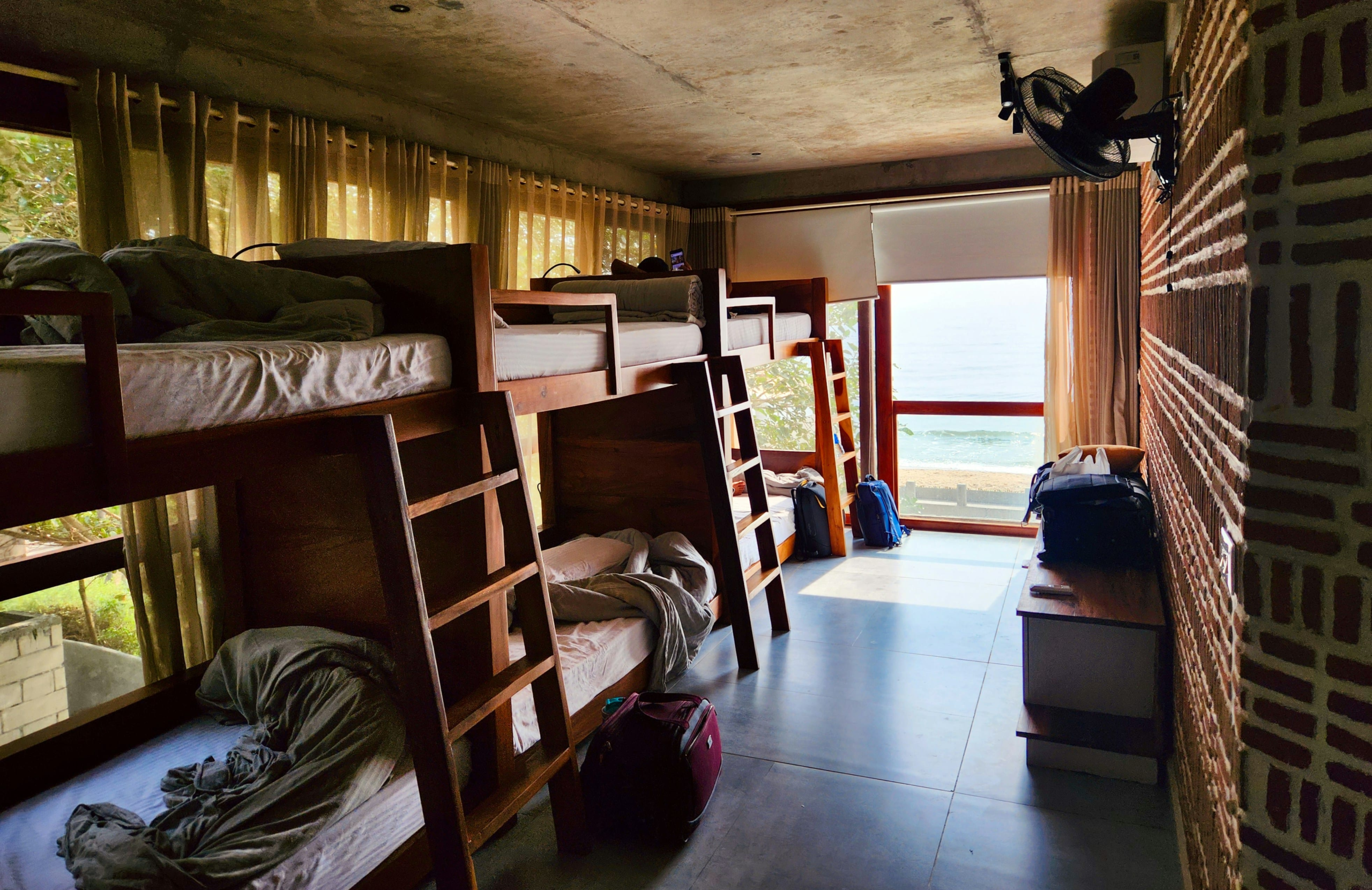
How to Avoid Bad Suite Views: A Strategic Guide to Hotel Sightlines
The “view” from a high-tier hotel suite is often treated as an intangible luxury, yet in the clinical reality of hospitality real estate, it is a quantifiable asset with a specific financial yield. For the traveler, the vista acts as the psychological anchor of their stay; it defines the sense of place and validates the premium paid for the accommodation. However, there is a systemic friction between the marketing images found on booking platforms and the physical reality of a property’s “inventory.” This friction frequently results in a guest experience defined by disappointment, where the promised panorama is obscured by architectural oversights, neighboring construction, or clever photographic manipulation.
Mastering the environment of a luxury stay requires a move away from passive booking toward an active, investigative methodology. It is not enough to select a category labeled “Ocean View” or “City View” and assume the experience will be uniform. The hospitality industry operates on a spectrum of visual quality, where a “partial view” can range from a sliver of blue between two concrete towers to a stunning but slightly angled perspective. Understanding how to navigate this inventory is a skill set that combines architectural literacy, geographical awareness, and a grasp of hotel operational logic.
This analysis moves beyond surface-level travel tips to explore the structural reasons why visual failures occur in luxury suites. By treating the suite as a fixed point in a dynamic urban or natural landscape, we can develop a framework for predicting visual outcomes before arrival. The goal is to provide a definitive reference for the discerning traveler—one that treats the vista not as a matter of luck, but as a result of rigorous planning and due diligence.
Understanding “how to avoid bad suite views”
To engage with the challenge of how to avoid bad suite views, one must first acknowledge the ambiguity of hotel room labeling. In the professional hospitality lexicon, room categories are often broad enough to cover a variety of actual physical layouts. A common misunderstanding is the belief that higher floor numbers automatically correlate with better views. While elevation generally clears the immediate street-level noise and smaller obstructions, it can also introduce new problems, such as looking directly into the mechanical HVAC systems of taller adjacent buildings or being so high that the connection to the landmark—be it the Eiffel Tower or the ocean—becomes abstract and flattened.
Oversimplification is the primary risk here. Many travelers rely on “room type” descriptions that are intentionally vague. A “Park View” might include a view of the park, but it might also include a foreground dominated by a busy six-lane highway or a parking garage. From a multi-perspective standpoint, the hotel’s revenue manager seeks to sell every room at the highest possible tier, while the guest seeks the “best” room within that tier. This natural conflict of interest means that the burden of verification lies entirely with the guest.
True avoidance of sub-optimal views requires an understanding of “sightline geometry.” This involves analyzing the angle of the window relative to the primary landmark and the “visual noise” in the foreground. It is a process of deconstructing a 3D environment using 2D tools—maps, photos, and floor plans—to ensure that the physical reality of the suite matches the emotional expectation of the stay.
The Historical Evolution of the Visual Premium
The concept of the “view” as a marketable commodity began with the 19th-century European Grand Tour. Before the advent of modern air conditioning and soundproofing, the most desirable rooms were often those with the best ventilation and the least exposure to the odors of the street, which naturally led to higher-floor rooms overlooking gardens or water. The “view” was originally a byproduct of health and hygiene rather than pure aesthetics.
With the rise of high-rise construction in the early 20th century, particularly in cities like New York and Chicago, the vista became a symbol of status. The “Penthouse” emerged as the ultimate expression of this, offering a 360-degree perspective that signaled dominance over the urban environment. In the post-war era, the development of luxury resorts in Hawaii, the Caribbean, and the Mediterranean solidified the “Ocean Front” category as the industry’s primary revenue driver.
Today, we have entered the era of “Visual Transparency.” Digital tools have made it harder for hotels to hide bad views, yet the complexity of modern architecture—with its cantilevered wings and “jigsaw” floor plans—has created a new generation of “obstructed view” suites. The historical trajectory has moved from views as a functional necessity to views as an elite status symbol, and finally to views as a high-risk consumer purchase.
Conceptual Frameworks for Visual Due Diligence
To predict the quality of a view, one can employ several mental models that simplify the complexity of hotel architecture.
The Parallax Framework
This model considers how the view changes as one moves through the suite. A common failure in suite design is the “Tunnel View,” where the vista is only visible if one stands directly against the glass. The Parallax Framework prioritizes suites where the landmark is visible from multiple points—the bed, the seating area, and even the bathroom. If the view is “static” (only visible from one narrow angle), the value of the suite is significantly lower.
The Urban Decay/Development Cycle
This framework treats the view as a temporary asset. It requires looking at the surrounding neighborhood not just as it is, but as it will be. This involves checking local zoning and active construction permits. A “bad view” is often a “good view” that was suddenly interrupted by a new construction project.
The Foreground-to-Background Ratio
A superior view is defined by what is in the foreground as much as what is in the background. If the background is the ocean but the foreground is a noisy pool deck or a roof with satellite dishes, the visual experience is “polluted.” This framework helps travelers identify suites that offer “purity” of vision.
Key Categories of Visual Obstruction and Trade-offs
| Obstruction Type | Description | Potential Trade-off |
| Architectural Protrusion | Cantilevered beams, balcony walls, or hotel wings. | Often offers better wind protection and privacy. |
| Mechanical/HVAC | Roof-mounted cooling towers or elevator penthouses. | Usually found in “upgraded” rooms that are otherwise large. |
| Vegetation Overgrowth | Mature trees or palm fronds blocking the window. | Offers superior shade and natural privacy. |
| Glass Quality/Reflectivity | Tinted or dirty glass that reduces clarity. | Essential for heat management in tropical climates. |
| Neighboring Development | Adjacent buildings within 50 feet of the window. | Often means the hotel is in a prime, central location. |
The Logic of Selection
Avoiding a bad view is often a matter of choosing the “lesser” of two obstructions. In an urban environment, a suite facing a quiet courtyard may be a better choice than a “City View” suite that looks directly into an office building’s fluorescent lights. The decision logic must prioritize the quality of light and privacy over the nominal label of the view.
Detailed Real-World Scenarios
Scenario A: The “Partial Ocean View” Trap
A resort in Maui offers “Partial Ocean View” suites. In reality, these are rooms where the ocean is only visible if the guest leans over the balcony railing at a 45-degree angle. The foreground is dominated by the hotel’s loading dock. The Failure Mode: Relying on the hotel’s stock photography. The Mitigation: Requesting a room in a specific wing (e.g., the North Wing) that is known to have a more perpendicular orientation to the shore.
Scenario B: The Urban “Corner Suite” Illusion
Corner suites are often sold at a premium because they offer dual-aspect views. However, if the corner is positioned toward the intersection of two narrow streets, the “view” is simply a panoramic look at the building across the street. The Second-Order Effect: Increased noise pollution due to the “canyon effect” of the two streets.
Scenario C: The Low-Floor Garden Suite
A traveler books a garden suite to avoid the “vertigo” of a high-rise. However, the garden is actually a “living wall” that attracts insects and requires early-morning maintenance by staff. The Lesson: “Garden” is often a euphemism for “we have no vista, so we planted some bushes.”
Planning, Cost, and Resource Dynamics
The financial cost of a view is often hidden in the “supplement” price. Understanding how to avoid bad suite views requires a cost-benefit analysis of these supplements.
| View Tier | Typical Price Premium | Value Retention |
| No View/Internal | Base Rate | Low; feels claustrophobic over 48 hours. |
| Standard City/Garden | +15% to 20% | Moderate; provides natural light. |
| Prime Landmark/Ocean | +40% to 100% | High; defines the memory of the trip. |
| Guaranteed Panoramic | +150%+ | Diminishing returns after the first day. |
Opportunity Costs
Investing heavily in a suite with a “Grand Canal” view in Venice may mean sacrificing the budget for private water taxis or high-end dining. If the traveler intends to be out of the room from 9:00 AM to 9:00 PM, the “view premium” is a wasted resource. The best value is often found in rooms with “Obstructed Views” that are priced significantly lower but still offer excellent light and partial vistas.
Tools, Strategies, and Support Systems
To ensure a high-quality view, travelers should utilize these proactive strategies:
-
Google Earth 3D View: Use the “street view” and “3D” modes to look at the hotel’s exterior from the perspective of the surrounding buildings. This reveals hidden obstructions like parking garages or empty lots slated for development.
-
The “Corner Room” Request: Specifically ask for the “01” or “last” room on a floor, as these are typically located at the building’s extremities and offer the widest angles.
-
Third-Party Review Images: Ignore the hotel’s professional gallery. Look at traveler-submitted photos on review sites, specifically those labeled “View from my room.”
-
Satellite Map Analysis: Identify the “long axis” of the hotel. Rooms on the long axis are less likely to have “wing-block” than rooms on the short axis or in the “crook” of an L-shaped building.
-
Direct Concierge Inquiry: Ask a specific, non-subjective question: “Which room numbers on the 10th floor have a view that is not blocked by the adjacent office tower?”
Risk Landscape and Failure Modes
The primary risk in view-hunting is “Room Roulette”—the process where the front desk assigns rooms based on availability at the moment of check-in.
-
The “Upgrade” Failure: Accepting a “complimentary upgrade” to a larger suite that happens to be on a lower floor with a worse view than the smaller room originally booked.
-
The Seasonal Block: In summer, deciduous trees can completely block a view that was perfectly clear in the winter photos.
-
The Atmospheric Variable: A “Mountain View” suite is a high-risk investment in regions prone to fog or smog. If the landmark is invisible 50% of the time, the premium is lost.
Governance, Maintenance, and Long-Term Adaptation
For the frequent traveler, maintaining a high visual standard requires a “Feedback Loop.”
-
The Room Diary: Keeping a log of specific room numbers at favorite properties that offer the best vistas.
-
The Check-in Audit: Never unpack until the view has been verified. If the view is “bad,” the leverage to move rooms is highest before the luggage is exploded across the suite.
-
The Seasonal Adjustment: Recognizing that a “Sunset View” is only valuable if the traveler is actually in the room during that specific 20-minute window.
Measurement, Tracking, and Evaluation
How do we quantify the “Quality of View” (QoV)?
-
The “180-Degree” Test: Can you see the horizon without moving your head? (Quantitative)
-
The “Visual Silence” Metric: The absence of flashing neon signs, construction cranes, or laundry areas in the primary sightline. (Qualitative)
-
The Privacy Coefficient: Can you see the neighbors in the building across the street as clearly as they can see you? If yes, the QoV is low regardless of the landmark.
Common Misconceptions and Oversimplifications
-
Myth: “The top floor always has the best view.” Correction: Many modern hotels have thick “cornice” designs or window washing equipment parked on the top floor, which can obstruct the view. The “sub-penthouse” floor is often better.
-
Myth: “Corner rooms are always better.” Correction: If the corner faces a mechanical shaft or a dark alley, it’s just more glass looking at nothing.
-
Myth: “The hotel will give me a good view if I say it’s a special occasion.” Correction: Status in the hotel’s loyalty program or a confirmed “Premium View” booking always trumps “Special Occasions” in the room assignment algorithm.
-
Myth: “Floor plans don’t change.” Correction: Hotels often renovate and combine rooms, meaning the “view” from a specific room number can change over time.
Ethical and Contextual Considerations
There is a growing ethical dimension to the “view.” In over-touristed cities, the desire for a “Local Life” view can lead to intrusive “gawking” into the private homes of residents. Furthermore, the light pollution generated by high-rise hotels to ensure their own facades look good for “other” viewers is an environmental concern. Responsible travelers should prioritize properties that use “smart glass” to reduce glare and light spill, ensuring that their visual pleasure doesn’t come at the cost of the local community’s privacy or energy efficiency.
Conclusion
The pursuit of a perfect vista is an exercise in environmental awareness and investigative rigor. By understanding the architectural and operational systems that govern how to avoid bad suite views, travelers can move beyond the “luck of the draw” and secure an environment that supports their psychological and emotional needs. A view is not a static picture; it is a dynamic interaction between light, geometry, and urban planning. True mastery of the hotel stay begins with the realization that the window is the most important piece of furniture in the room.